Network Operations Transformation Across 89 Sites in 50 Countries

Reckitt is a global consumer health and hygiene company operating across multiple countries and site environments, including offices, laboratories, distribution centres and manufacturing locations.

About the Client

Reckitt partnered with Infosys and TECEZE to execute a multi-country network transformation across 89 sites in 50 countries, standardising network delivery, accelerating site readiness and strengthening operational reliability through coordinated surveys, staging, installation, cutover, hypercare and compliant disposal.

At a glance

Industry
Consumer Goods
Engagement / Service
Network Transformation & Last Mile Service Delivery
Coverage
89 sites across 50 countries in the Americas and Europe
Challenge
Diverse site types, time zones, legacy network environments and local compliance requirements made consistent network deployment and change execution complex.

Success highlights

  • 89 sites — Network transformation delivered
  • 50 countries — Multi-country coverage across the Americas and Europe
  • Standardised — Network baseline across diverse sites
  • Faster — Time-to-value through pre-staged configurations
  • Improved — Reliability, supportability and operational confidence

The challenge

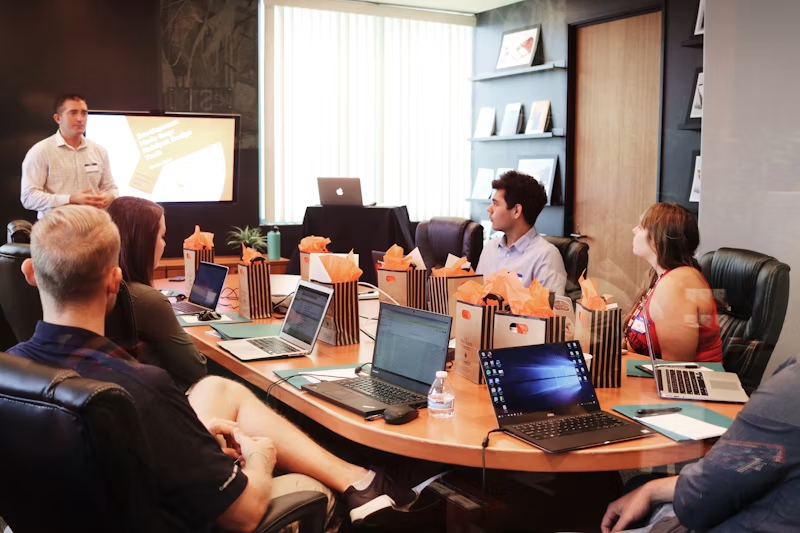
Corporate meeting

Delivering a consistent network transformation across 50 countries

Standardising network delivery across diverse locations

Reckitt required a consistent, secure and scalable network baseline across diverse locations while reducing equipment and configuration drift. The transformation covered offices, laboratories, distribution centres and manufacturing environments, each with different physical, technical and operational requirements.

Geographic breadth and time-zone differences added complexity to change-window coordination, while local carriers, language requirements, compliance obligations and legacy network topologies required a flexible but standardised delivery model.

The programme also needed stronger documentation, end-user experience and site resilience without disrupting critical operations.


Our approach

A governed delivery model combining global coordination with precise on-site execution

TECEZE worked alongside Infosys and Reckitt to deliver a structured network transformation programme covering planning, site readiness, staging, installation, cutover, hypercare and secure disposal.

The delivery model combined standardisation, governance and disciplined field execution across every stage:

Joint programme management

A TECEZE programme manager partnered with Infosys and Reckitt to coordinate delivery, manage risks and issues, establish escalation paths and maintain programme governance.

Standardised runbooks and quality gates

Standardised procedures covered survey, staging, installation, cutover and hypercare, with defined entry and exit criteria to improve readiness and execution quality.

Network and wireless site surveys

Site surveys captured physical constraints, power, rack space and cabling requirements, while wireless surveys supported access-point placement and channel planning.

Staging and pre-deployment readiness

Centralised golden images and configuration templates reduced deployment variance, while hardware burn-in testing and configuration checks improved readiness before installation.

Precise on-site execution

Certified engineers were assigned according to workstream requirements, with structured rack/stack, cabling, labelling, power and environmental checks supported by photographic documentation.

Controlled cutover and command centre

Change windows were aligned with local business hours and critical operations, while a real-time command centre coordinated TECEZE, Infosys and Reckitt teams through live issue logs and rollback procedures.

Hypercare and handover

Post-cutover monitoring focused on targeted thresholds, ticket triage and rapid remediation, followed by transfer of as-built documentation, port maps, RF documentation and lessons learned.

Secure and compliant disposal

Decommissioned equipment was securely sanitised and tracked through chain-of-custody processes, with certified recyclers supporting regional e-waste compliance requirements.

Governance and delivery control

The programme combined global coordination with local execution controls, giving Infosys and Reckitt clear visibility across site readiness, deployment progress, cutover risks, hypercare and final handover.


The results: Following the network transformation across 89 sites

A standardised network foundation with stronger delivery confidence

89 Sites with a standardised network baseline delivered
50 Countries covered across the Americas and Europe
50 Time-to-value through pre-staged configurations and tightly managed change windows
80% Operational confidence through complete documentation, as-built records and trained teams
90% User experience supported by improved wireless coverage and connection performance
70% Network foundation reducing configuration variance across diverse environments

What the client says

“TECEZE brought the coordination, field expertise and delivery discipline needed to execute a complex multi-country network transformation consistently across our sites.”

— Client IT Leadership, Reckitt

Delivery partnership

Infosys, Reckitt and TECEZE working as one delivery team

TECEZE worked in close partnership with Infosys and Reckitt throughout the programme. Infosys provided overall programme governance as the Global Systems Integrator, while TECEZE served as the Delivery Partner responsible for last-mile execution across site surveys, wireless surveys, staging, physical installation, cutover, hypercare and disposal.

The coordinated model combined central programme governance with skilled local engineering resources to maintain consistent standards across diverse sites and countries.


Looking ahead

Building on a standardised network foundation

The transformation provides Reckitt with a more consistent and supportable network baseline across its sites. The standardised runbooks, documentation, deployment practices and operational handover model also create a repeatable foundation for future network changes, site upgrades and infrastructure lifecycle activities.